
About ISI
The Invasion Science Institute brings together expertise from across the university and fosters partnerships both within and beyond academia to address urgent challenges related to biological invasions. The Institute supports innovative, interdisciplinary academic programs to train the next generation of invasion scientists and practitioners, while also offering expert guidance and educational resources to stakeholders, policymakers, and the public.
Institute faculty span a wide range of disciplines—including biology, ecology, genetics, data science, economics, policy, engineering, law, and humanities, reflecting the complex nature of invasive species and their impacts. The Invasion Science Institute seeks to coordinate cross-disciplinary research, education, and outreach focused on the drivers, consequences, and management of invasive species across natural and managed systems.
Vision
To be a global leader in the understanding, prevention, and management of invasive species.
Mission
Facilitate interdisciplinary research to advance our understanding of the causes and consequences of invasive species; generate innovative approaches to reduce invasions and their impacts on natural, agricultural, and urban systems; and train the next generation of invasion scientists.
Staff
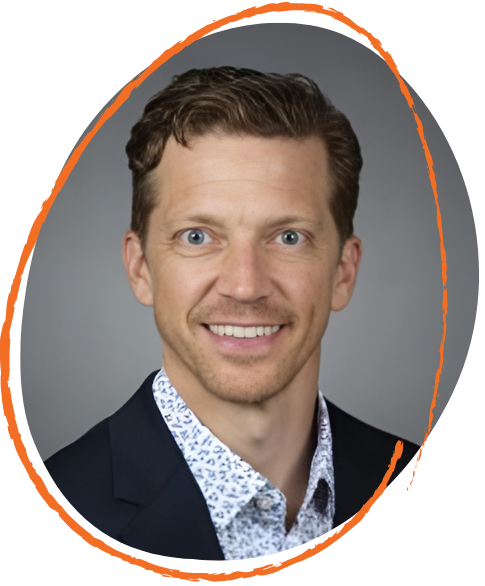
S. Luke Flory
Director
Bio
Luke Flory’s research focuses on the mechanisms and impacts of non-native species invasions with the goal of understanding mechanisms and impacts of invasions, and the long-term consequences of interactions between invasive species and other global change drivers such as climate change, emerging pathogens, and urbanization. The Flory Lab explores basic and applied questions in natural and managed ecosystems such as the highlands of Galápagos, urban sites in Zagreb, Croatia, eastern deciduous forests in the US, and pine forests and managed systems in Florida. Luke has been named a Fulbright U.S. Scholar, Florida Climate Institute Distinguished Faculty Fellow, UF Research Foundation Professor, and UF International Educator of the Year. He holds a M.Sc. in Applied Ecology and a Ph.D. in Ecology and Evolutionary Biology from Indiana University.
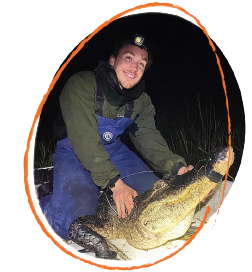
Paul Evans
Research Coordinator
Bio
Paul, ISI’s Research Coordinator, works with affiliated partners and internal and external boards to create innovative and necessary research. He studies terrestrial invasive species dispersion, community ecology, and community-based education and reporting. He earned his bachelor’s from the University of South Florida and his MSc. in Ecology and Conservation from Aberdeen. He uses wildlife education, scientific research, and public involvement to fill conservation knowledge gaps. He previously collaborated with biologists to study herpetofauna and crocodilians in South Florida, the Caribbean, and endangered Central American species. He is delighted to continue his work in Florida after raising awareness of lesser-studied species in Alaska and Scotland.
ISI Staff Alumni
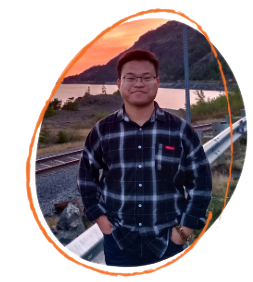
Yunpeng Liu
Postdoctoral Associate
Bio
Yunpeng Liu is from China and obtained his PhD degree on Ecology at Peking University in 2021. He used to be a visiting scholar in the University of Copenhagen in Denmark during 2019-2020 and a postdoc during 2021-2023 cofounded by Peking University and the Florida Museum of Natural History in UF. He joined the Invasion Science Research Institute (ISRI) in middle 2023 as a postdoctoral researcher.
He is experienced in biogeography, macroecology and biodiversity conservation. His previous works addressed the formation of plant diversity, evolution of ecological niches and the underlying drivers at large spatial and temporal scales (Google Scholar). He will integrate his knowledge on invasive science and address the interplay between invasive insects and their host plants. His future research will focus on modeling and evaluating the invasion risk of exotic species under future climate change.
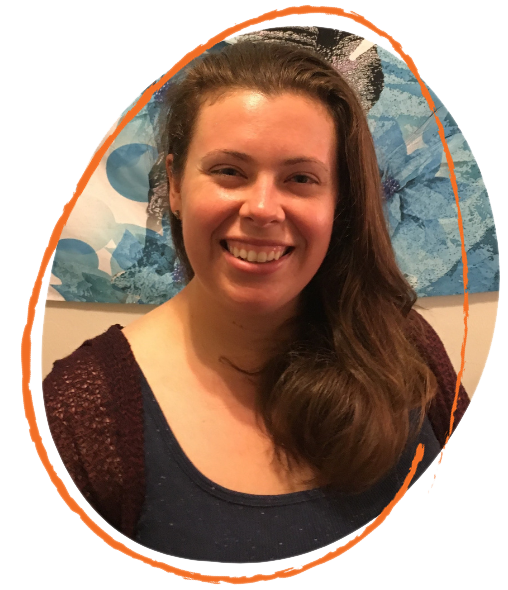
Diane J.E. Sturgeon
Postdoctoral Associate
Bio
Diane is a social scientist that received her PhD in Interdisciplinary Ecology from the University of Florida in 2023. She has experience in both qualitative and quantitative social science methods and analyses, with a focus on Human Dimensions work. Her previous work has focused on Human Dimensions of the wildlife trade, with a specific look at the exotic, non-traditional pet trade. She is very excited to be a postdoctoral researcher for UF’s Invasion Science Research Institute (ISRI) and explore the intersection of social and invasion science.